Can - Future Days -1973- Remaster -2005- Flac -...

CheckTime transforme votre gestion du temps de travail avec une solution automatisée, sécurisée et intuitive. Optimisez votre productivité dès aujourd'hui.

+95%
Précision des pointages
-70%
Temps de gestion
100%
Conforme RGPD
Dashboard CheckTime

Fonctionnalités Avancées

Découvrez comment CheckTime révolutionne votre gestion du temps de travail

Pointage Biométrique

Reconnaissance faciale et empreintes digitales pour un pointage sécurisé et infaillible.

  • Reconnaissance en temps réel
  • Anti-fraude intégré
  • Multi-devices compatibles

Analytics Avancés

Tableaux de bord personnalisables avec analyses prédictives et rapports automatisés.

  • Prédiction des absences
  • KPI personnalisés
  • Export automatique

IA Intégrée

Intelligence artificielle pour l'optimisation des plannings et détection des anomalies.

  • Planning intelligent
  • Alertes prédictives
  • Optimisation automatique

Pourquoi Choisir CheckTime ?

Notre solution combine innovation technologique et simplicité d'utilisation pour répondre aux besoins des entreprises modernes.

Installation Rapide

Mise en place en moins de 24h, aucune infrastructure complexe nécessaire.

Sécurité Maximale

Données chiffrées, conformité RGPD, accès sécurisés par double authentification.

Support Premium

Équipe dédiée disponible 7j/7 pour accompagner votre transition digitale.

Team Collaboration

Ils Nous Font Confiance

Rejoignez les entreprises leaders qui utilisent CheckTime

While the original 1973 release was praised for its "vaporous intensity," the 2005 remaster (released by Spoon Records ) breathed new life into the recordings. Remastered by Andreas Torkler , this version focused on clarifying the dense layers of Irmin Schmidt’s synthesizers and Holger Czukay’s intricate tape edits. What Is Lossless Audio, and Do You Really Need It? - WIRED

The 2005 remaster, overseen by Irmin Schmidt and sound engineer Andreas Torkler, achieved several critical breakthroughs: 1. Expanded Dynamic Range

For an album as atmospheric and texturally complex as Future Days , the format is the definitive way to listen.

The album's opening track, "Sing Swan Song," sets the tone for the record, with Irmin Schmidt's soaring vocals and poetic lyrics accompanied by the band's intricate instrumentation. The song's dreamy, psychedelic quality is balanced by the driving rhythms of "North," which showcases Jaki Liebezeit's innovative drumming and Holger Czukay's melodic bass lines.

This public link is valid for 7 days and shares a thread, including any personal information you added. This link or copies made by others cannot be deleted. If you share with third parties, their policies apply. Can’t copy the link right now. Try again later.

Future Days marked a radical departure in tone. The jagged, propulsive edges of tracks like "Vitamin C" or "Halleluwah" were smoothed out, replaced by a softer, more impressionistic approach. The album consists of just four tracks, each functioning less like a traditional song and more like a self-sustaining ecosystem.

Hip-hop and electronic producers continue to marvel at Jaki Liebezeit’s drumming, which achieved the perfect consistency of a digital sampler decades before the technology existed.

Future Days is widely regarded as a cornerstone of ambient rock and a precursor to the "post-rock" movement of the 1990s. Its DNA can be found in the expansive soundscapes of bands like Talk Talk ( Spirit of Eden ), Bark Psychosis, and Tortoise. Similarly, the album's rhythmic precision and texturing heavily influenced Radiohead, particularly during their Kid A and In Rainbows eras.

Future Days is the sound of a band discovering . With Suzuki’s lyrics becoming sparse, cryptic mantras (in his invented “Gibberish” language), and the rhythm section of Jaki Liebezeit and Holger Czukay locking into a hypnotic, minimalist pulse, the album floats.

In the early 1970s, CAN was at the peak of their creative output, having already released several albums that garnered critical acclaim. "Future Days" was the band's fifth studio album, recorded in March 1973. The album marked a significant point in CAN's evolution, showcasing a more refined and structured approach to their music while still maintaining their experimental edge.

For the digital age, this SACD was meticulously ripped and converted into high-resolution FLAC files.

Czukay’s foundational basslines are warm and round, driving the tracks forward without overpowering the fragile higher frequencies. Why FLAC is the Ultimate Format for Future Days
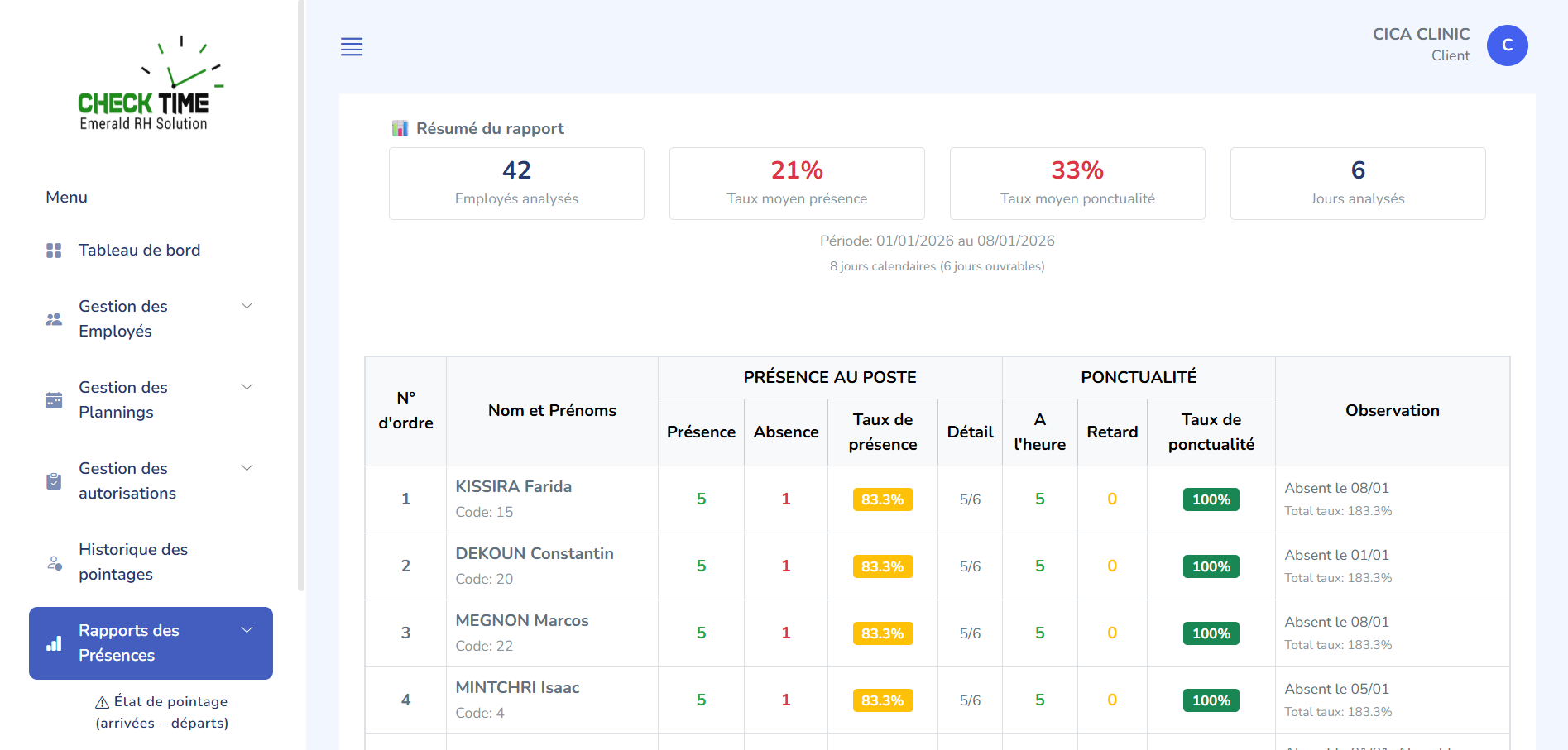

Télécharger notre application Desktop Windows

Profitez de toute la puissance de CheckTime directement depuis votre ordinateur Windows

CheckTime Desktop

Version 1.0

Dernière mise à jour : Nov. 2025

Ils Nous Font Confiance

Découvrez ce que disent nos clients satisfaits

Sarah Dupont

"CheckTime a réduit notre temps de gestion des présences de 70%. Une solution exceptionnelle !"

Sarah Dupont

Directrice RH, TechVision

Marc Leroy

"L'intégration avec notre système de paie a été parfaite. Gain de temps considérable !"

Marc Leroy

CEO, InnovGroup

Thomas Martin

"La reconnaissance faciale fonctionne parfaitement, même avec le port du masque."

Thomas Martin

Directeur d'Usine, ProdCorp

Can - Future Days -1973- Remaster -2005- Flac -...

While the original 1973 release was praised for its "vaporous intensity," the 2005 remaster (released by Spoon Records ) breathed new life into the recordings. Remastered by Andreas Torkler , this version focused on clarifying the dense layers of Irmin Schmidt’s synthesizers and Holger Czukay’s intricate tape edits. What Is Lossless Audio, and Do You Really Need It? - WIRED

The 2005 remaster, overseen by Irmin Schmidt and sound engineer Andreas Torkler, achieved several critical breakthroughs: 1. Expanded Dynamic Range

For an album as atmospheric and texturally complex as Future Days , the format is the definitive way to listen.

The album's opening track, "Sing Swan Song," sets the tone for the record, with Irmin Schmidt's soaring vocals and poetic lyrics accompanied by the band's intricate instrumentation. The song's dreamy, psychedelic quality is balanced by the driving rhythms of "North," which showcases Jaki Liebezeit's innovative drumming and Holger Czukay's melodic bass lines. CAN - Future Days -1973- Remaster -2005- FLAC -...

This public link is valid for 7 days and shares a thread, including any personal information you added. This link or copies made by others cannot be deleted. If you share with third parties, their policies apply. Can’t copy the link right now. Try again later.

Future Days marked a radical departure in tone. The jagged, propulsive edges of tracks like "Vitamin C" or "Halleluwah" were smoothed out, replaced by a softer, more impressionistic approach. The album consists of just four tracks, each functioning less like a traditional song and more like a self-sustaining ecosystem.

Hip-hop and electronic producers continue to marvel at Jaki Liebezeit’s drumming, which achieved the perfect consistency of a digital sampler decades before the technology existed. While the original 1973 release was praised for

Future Days is widely regarded as a cornerstone of ambient rock and a precursor to the "post-rock" movement of the 1990s. Its DNA can be found in the expansive soundscapes of bands like Talk Talk ( Spirit of Eden ), Bark Psychosis, and Tortoise. Similarly, the album's rhythmic precision and texturing heavily influenced Radiohead, particularly during their Kid A and In Rainbows eras.

Future Days is the sound of a band discovering . With Suzuki’s lyrics becoming sparse, cryptic mantras (in his invented “Gibberish” language), and the rhythm section of Jaki Liebezeit and Holger Czukay locking into a hypnotic, minimalist pulse, the album floats.

In the early 1970s, CAN was at the peak of their creative output, having already released several albums that garnered critical acclaim. "Future Days" was the band's fifth studio album, recorded in March 1973. The album marked a significant point in CAN's evolution, showcasing a more refined and structured approach to their music while still maintaining their experimental edge. - WIRED The 2005 remaster, overseen by Irmin

For the digital age, this SACD was meticulously ripped and converted into high-resolution FLAC files.

Czukay’s foundational basslines are warm and round, driving the tracks forward without overpowering the fragile higher frequencies. Why FLAC is the Ultimate Format for Future Days